Key Takeaways
Dubai’s high gulf salinity causes rapid internal corrosion; flushing the engine cooling lines with fresh water immediately after ocean use is vital.
Expected jet ski maintenance cost figures cover routine oil changes, spark plug replacements, flushing kits, wear ring repairs, and seasonal storage prep.
Inspecting safety lanyards, bilge pumps, battery charge, and hull integrity before launching prevents mid-water engine failure and costly off-season overhauls.
Riding a personal watercraft along the Arabian Gulf offers breathtaking views of Dubai’s skyline, from the iconic Burj Al Arab to the Dubai Marina. However, the unique marine environment in the UAE presents specific challenges for watercraft owners. High saltwater salinity, intense ambient heat, and fine ambient sand accelerate mechanical wear and internal corrosion faster than in freshwater conditions.
Whether you operate a fleet or own a recreational watercraft, consistent jet ski maintenance is essential to safeguard your investment, ensure safety on the water, and preserve peak engine performance during a jet ski tour.
This guide outlines pre-ride checks, flushing procedures, seasonal maintenance schedules, and expected operational costs for maintenance for jet ski owners in Dubai.
Why Jet Ski Maintenance Matters in Dubai’s Environment
Operating a personal watercraft in Dubai exposes mechanical components to some of the most unforgiving marine conditions on earth. Understanding these environmental stressors helps owners take proactive steps to safeguard their engines before permanent structural or mechanical damage occurs.
The chemical composition and climate of the Arabian Gulf create three major hazards for personal watercraft engines:
High Salinity Levels
The Arabian Gulf maintains significantly higher salinity than open ocean waters. Salt crystallization inside cooling channels leads to rapid engine overheating and permanent water-jacket blockages.
Extreme Ambient Heat
Summer air temperatures exceeding 40°C place severe thermal strain on batteries, fuel lines, rubber cooling hoses, and electrical wire harnesses.
Fine Sand and Debris Ingestion
Shallow coastal launches frequently pull sand and fine gravel into the jet pump intake, prematurely eroding impellers and wear rings.
Without immediate post-ride rinsing and routine servicing, these environmental factors cause rapid power loss, compromised fuel efficiency, and a drastic drop in resale value. Reviewing practical jet ski tips for first-timers can also help new owners build safe handling habits while protecting their craft from avoidable operational strain.
The Ultimate Jet Ski Maintenance Checklist
Adopting a rigorous, step-by-step jet ski maintenance checklist ensures no vital safety or mechanical component gets overlooked before launching or after returning to shore. Dividing your routines into pre-ride inspections and post-ride cleanup keeps your watercraft in prime condition year-round.
Pre-Ride Inspection (Every Outing)
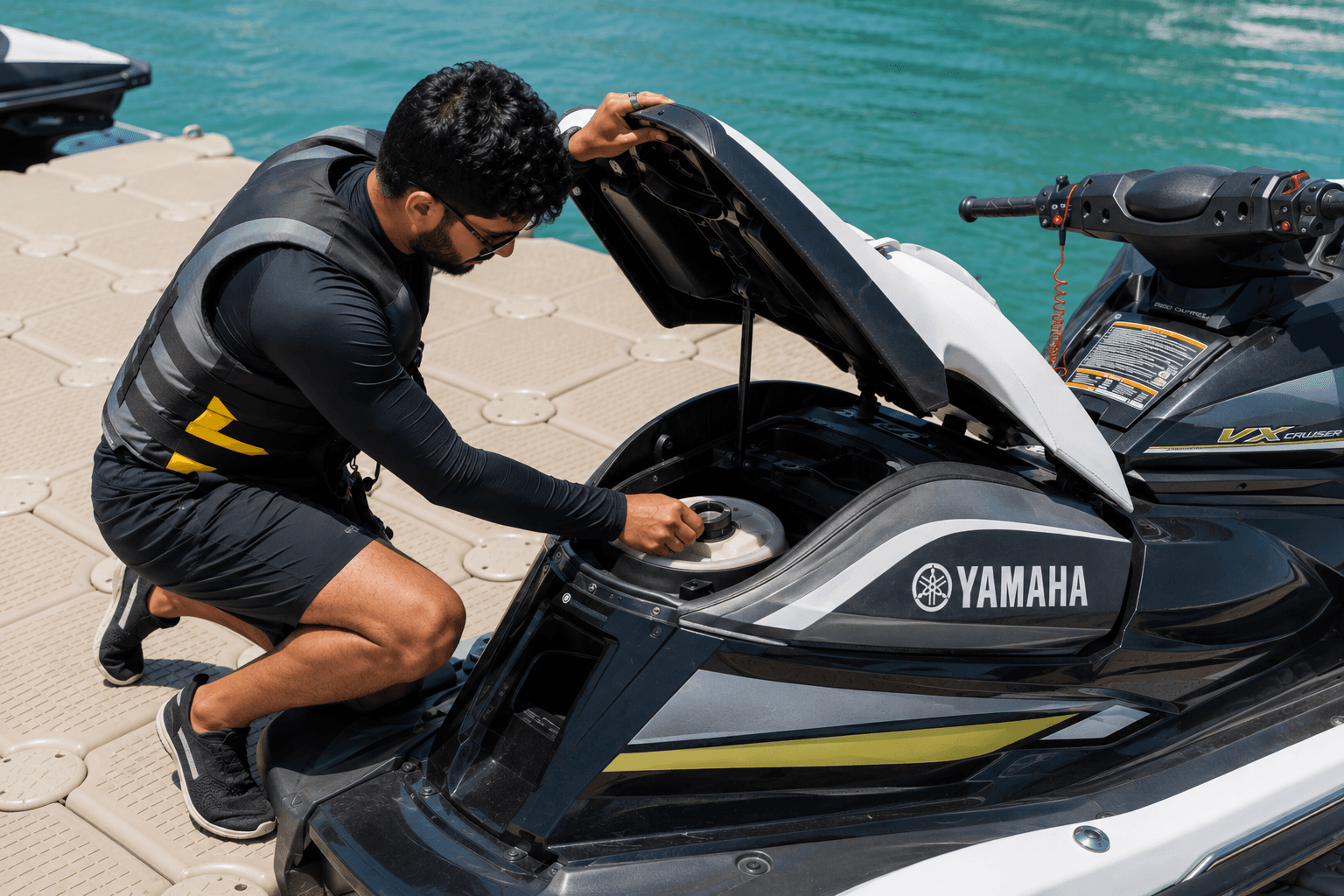
Fuel and Oil Verification
Top off high-octane fuel and inspect oil levels using the dipstick. Ensure fuel cap rubber seals remain tight to prevent saltwater contamination.
Engine Compartment Ventilation
Open the main seat hatch for several minutes to air out trapped fuel vapor accumulation prior to starting the engine.
Hull and Intake Grate Inspection
Check the fiberglass or Polytec hull for cracks, gelcoat chips, or deep gouges. Clear away algae, fishing line, or debris trapped inside the intake grate.
Battery Voltage and Terminal Check
Confirm battery terminals remain free of white oxidation and are fully tightened. Verify that the digital dashboard gauge displays healthy voltage above 12.6V at rest.
Safety and Operational Controls
Test the engine kill switch lanyard, throttle lever response, steering nozzle articulation, and verify automatic bilge pump activation.
Post-Ride Cleanup and Engine Flushing
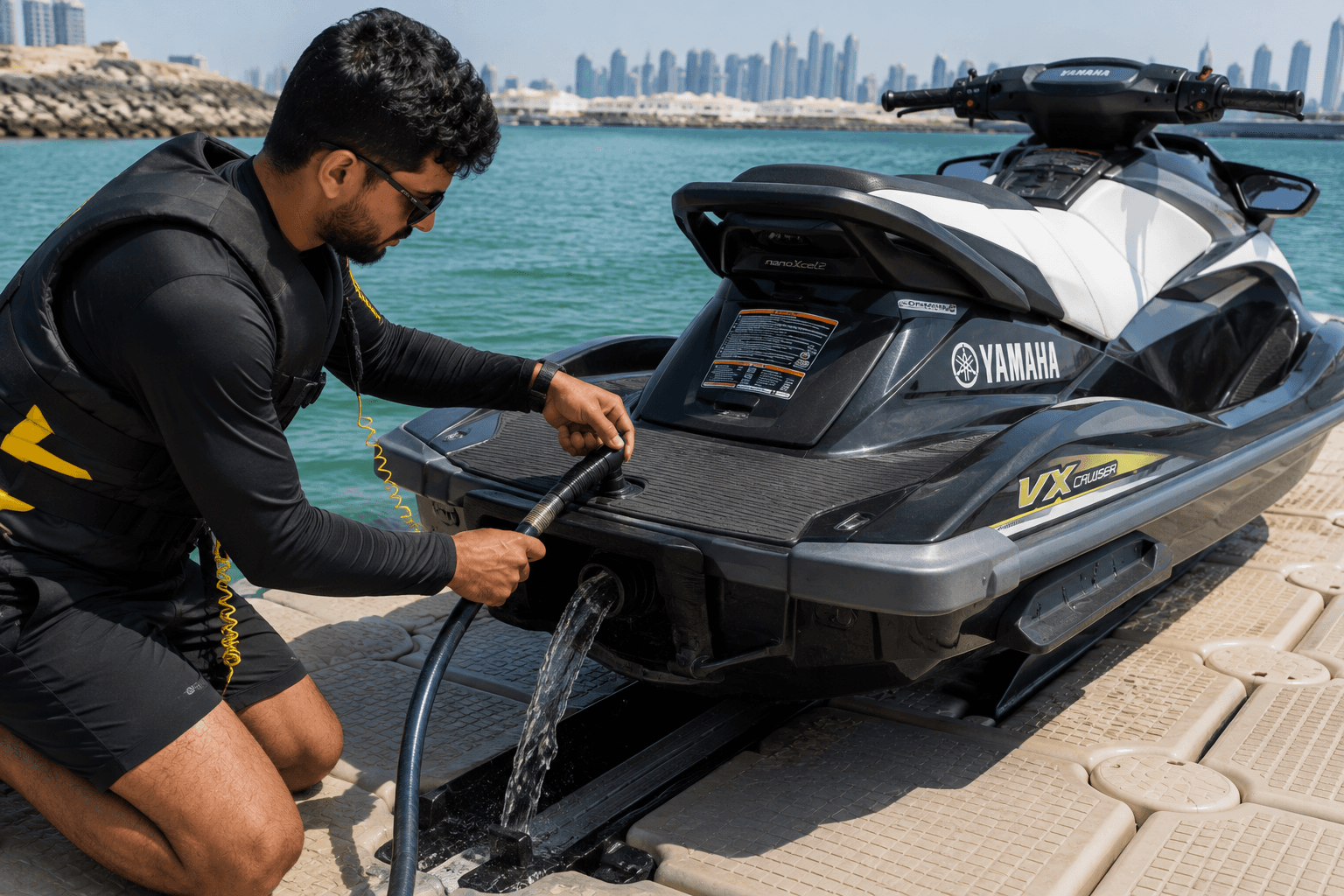
Flushing the cooling system represents the single most critical post-ride task for saltwater riders.
Connect Freshwater Supply
Attach a dedicated freshwater hose to the rear flushing port using an approved quick-connect adapter.
Critical Sequence Execution
Start the engine first, then immediately turn on the fresh water supply. Running water prior to starting the engine can force water backward into the engine cylinders through the exhaust valves.
Flush Duration
Run fresh water through the internal cooling passages for 2 to 3 minutes at idle speed to purge salt deposits and fine sand.
Shutdown Sequence
Turn off the water hose first, blip the throttle once or twice to clear residual water from the exhaust box, and then turn off the engine.
Exterior Surface Washdown
Rinse the hull, seat, handlebars, and jet pump assembly thoroughly using fresh water and marine-grade biodegradable soap.
Annual Jet Ski Maintenance Costs in Dubai (2026 Breakdown)
Budgeting accurately for jet ski maintenance cost items keeps ownership stress-free. Expenses vary depending on whether you choose a stand-up jet ski vs. waverunner, as naturally aspirated models and performance supercharged watercraft carry different service intervals.
To help you plan your annual upkeep, here is a detailed breakdown of standard service items and average pricing in Dubai marine workshops:
Maintenance Category | Frequency | Estimated Cost (AED) | Notes |
Engine Oil & Filter Service | Every 50 hours / Annually | AED 600 to 1,200 | Includes full synthetic marine oil, OEM filter, and spark plug replacement. |
Flush Kits & Corrosion Protection | Ongoing / After every ride | AED 150 to 350 | Anti-corrosion spray, flush hose adapters, salt-away wash solutions. |
Jet Pump & Wear Ring Maintenance | Every 100 hours / As needed | AED 800 to 1,800 | Replacing worn plastic wear rings, impeller re-pitching, or pump seal repacking. |
Supercharger Service (If applicable) | Every 100–200 hours | AED 2,200 to 4,500 | Rebuilding supercharger clutch washers and bearings on performance models. |
Off-Season / Summer Storage Prep | Annually (June–September) | AED 700 to 1,500 | Fuel stabilizer addition, fogging oil treatment, battery tender setup, and indoor storage covers. |
Total Estimated Annual Cost | Annual Budget | AED 3,000 to 6,500 | Excludes major emergency structural hull repairs or insurance premiums. |
Regular servicing keeps operating costs predictable and helps you avoid sudden, expensive mechanical overhauls caused by deferred care.
Off-Season and Summer Storage Tips in Dubai
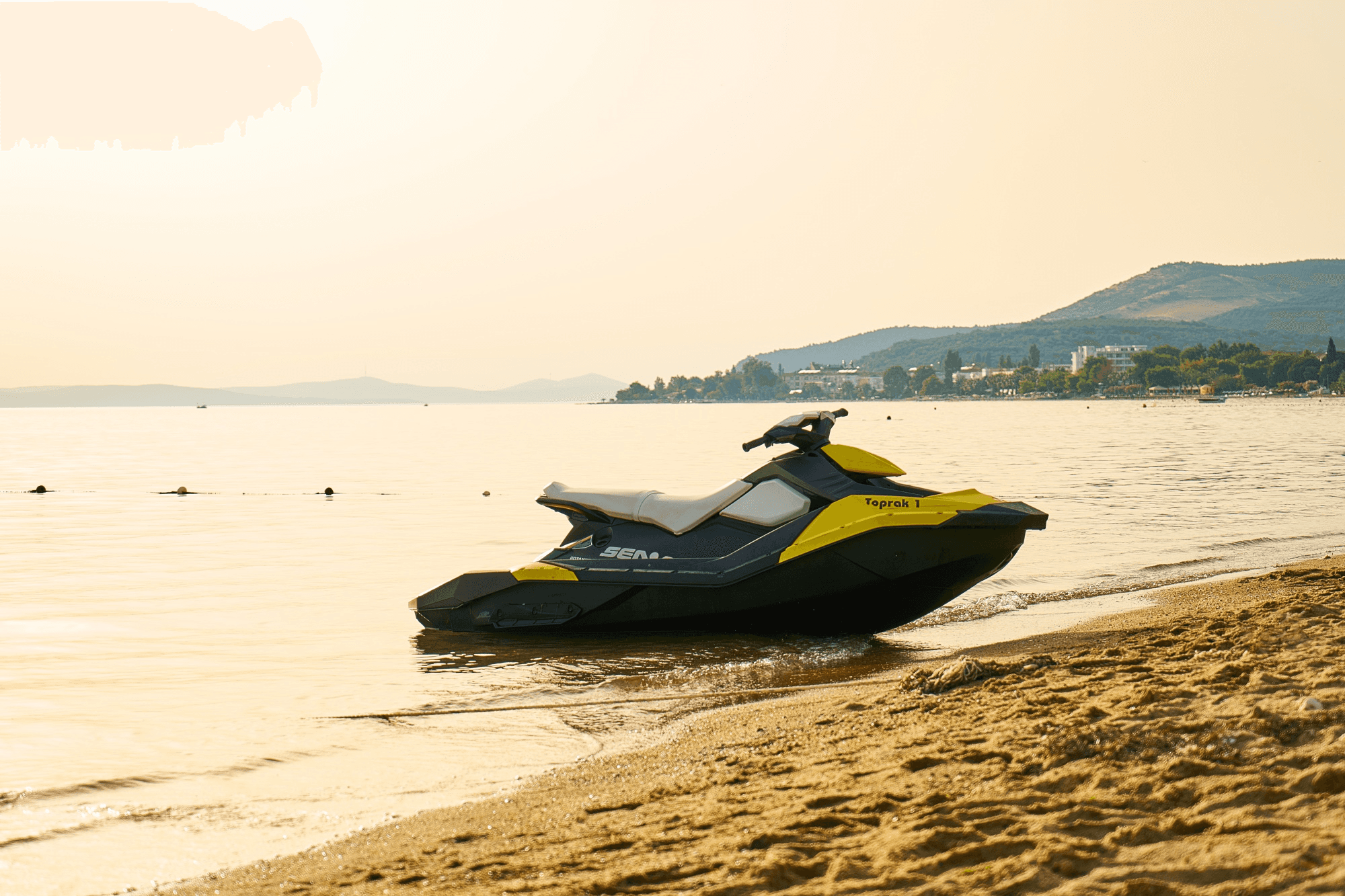
While Dubai offers fantastic winter riding conditions, the intense heat between June and September leads many owners to store their watercraft for several months. Leaving a jet ski sitting idle in extreme summer heat without proper preparation can ruin fuel systems, drain batteries, and dry-rot rubber hoses.
Taking a few protective steps before putting your watercraft into storage will preserve its mechanics until the cooling autumn weather returns:
Apply Anti-Corrosion Spray: Generously coat all exposed metallic engine parts, hose clamps, and steering linkages with a specialized marine anti-corrosion barrier spray.
Treat the Fuel System: Add high-grade marine fuel stabilizer to a full fuel tank, then run the engine for 5 minutes so the treated fuel circulates through the fuel rails and injectors.
Battery Maintenance: Disconnect the battery terminals, remove the unit from the ski, and store it in a climate-controlled room connected to an automatic smart trickle charger.
Elevate the Hull & Drain the Bilge: Park the watercraft on a dedicated trailer with the bow raised slightly and remove all drain plugs so internal condensation drains freely.
Skipping summer preparation often results in gummed-up fuel injectors and dead batteries when you try to start your ski again in October.
Proactive Maintenance vs. Reactive Repair
Ignoring minor service needs always leads to major repair bills down the road. In Dubai's saltwater environment, mechanical degradation happens exponentially faster than in freshwater lakes.
Here is a quick look at common issues caused by neglected care and what they cost to fix:
Corroded Exhaust Manifolds: Salt deposits cause internal metal pitting, allowing cooling water to leak directly into combustion chambers. Average repair cost: AED 5,000+.
Seized Jet Pump Impellers: Accumulated salt corrosion or trapped debris locking the driveshaft can destroy the complete pump housing. Average repair cost: AED 3,500+.
Supercharger Washer Failure: Failing to inspect supercharger slip washers causes metal fragments to break off into the engine crankcase, destroying the engine block. Average repair cost: AED 12,000+.
Scheduling routine inspections with certified marine mechanics keeps overall ownership costs manageable and protects your personal watercraft's resale value over its entire operational lifetime.
Essential Care for Hassle-Free Watercraft Ownership
A well-maintained watercraft is ultimately the difference between an unforgettable afternoon carving through the ocean and a costly delay towed back to shore. Mastering the basics by consistently flushing away salt deposits, staying ahead of fluid schedules, and shielding components during peak summer heat ensures your ski responds with peak performance every time you press the ignition.
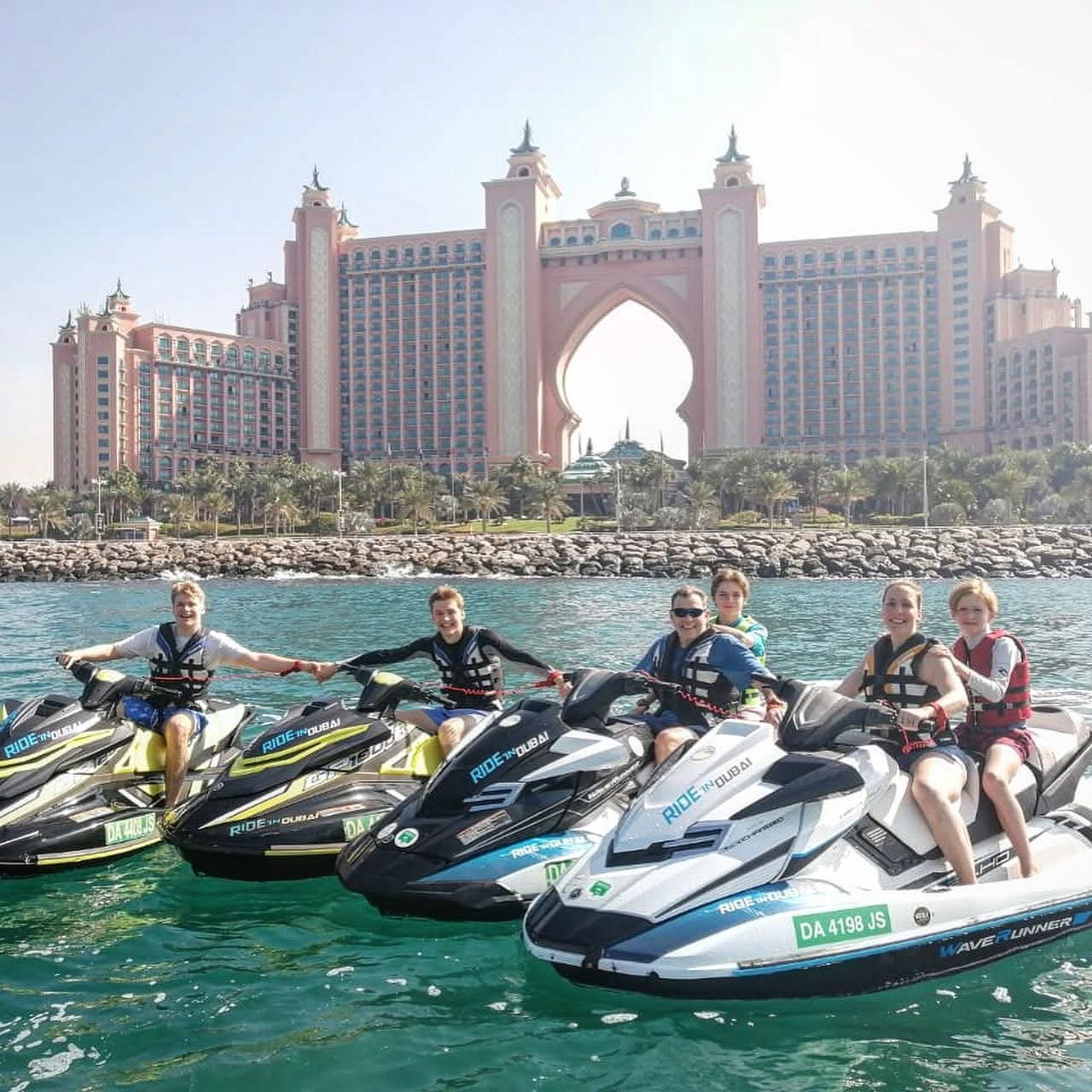
If managing seasonal service intervals, engine flushes, and routine mechanical checks feels like too much of a hurdle, partnering with dedicated marine specialists makes enjoying the water completely seamless. For those who want the thrilling experience of gliding past Dubai's coast without the heavy burden of private upkeep, turning to expert outfitters lets you enjoy pristine, professionally maintained watercraft ready to launch whenever the open sea calls.