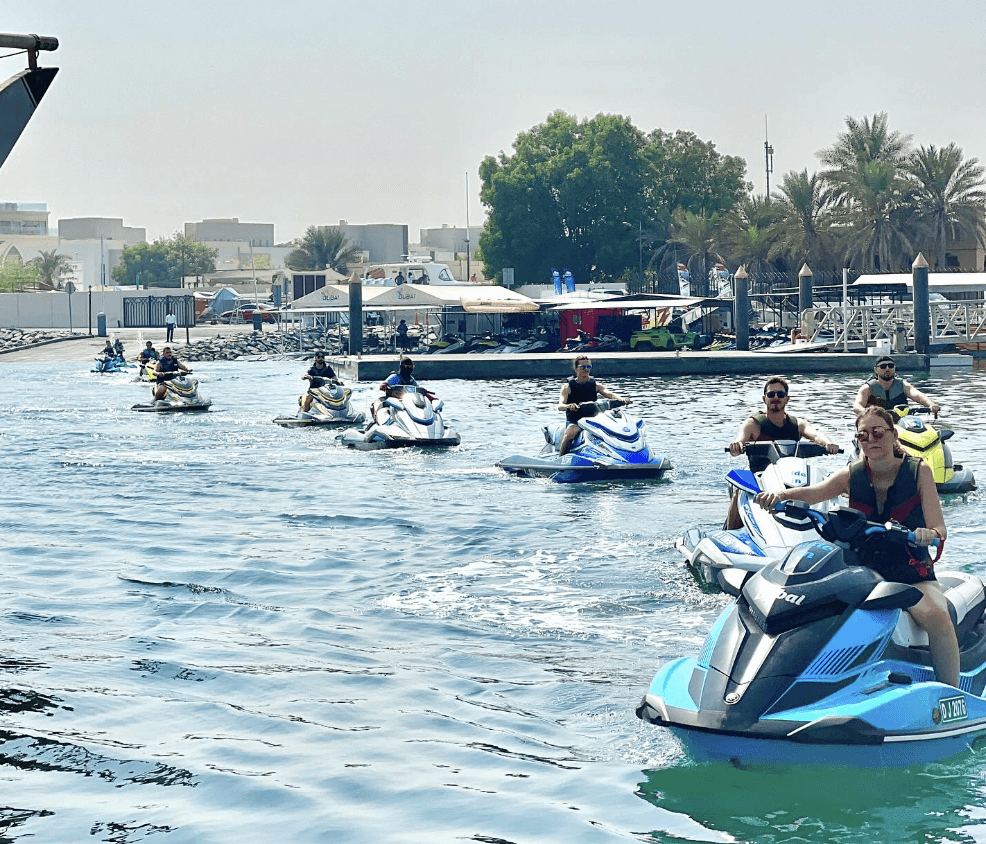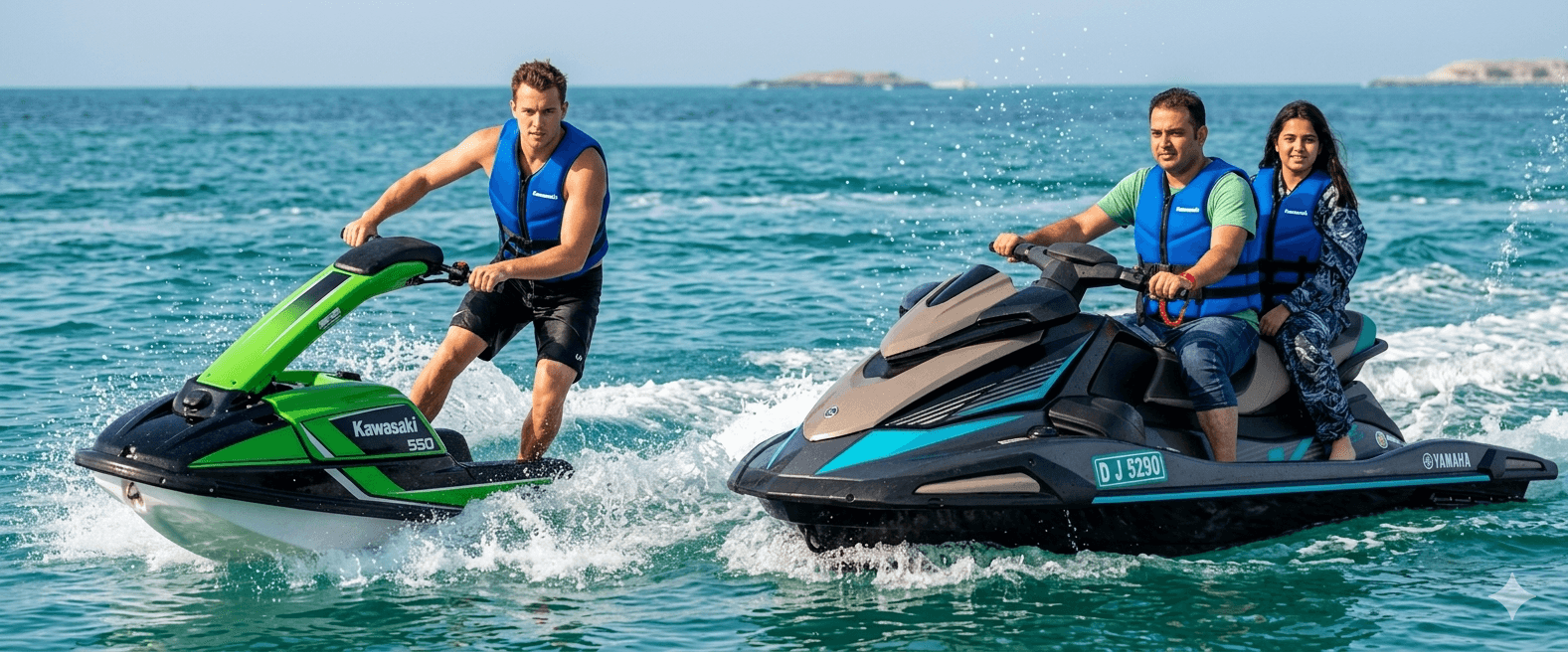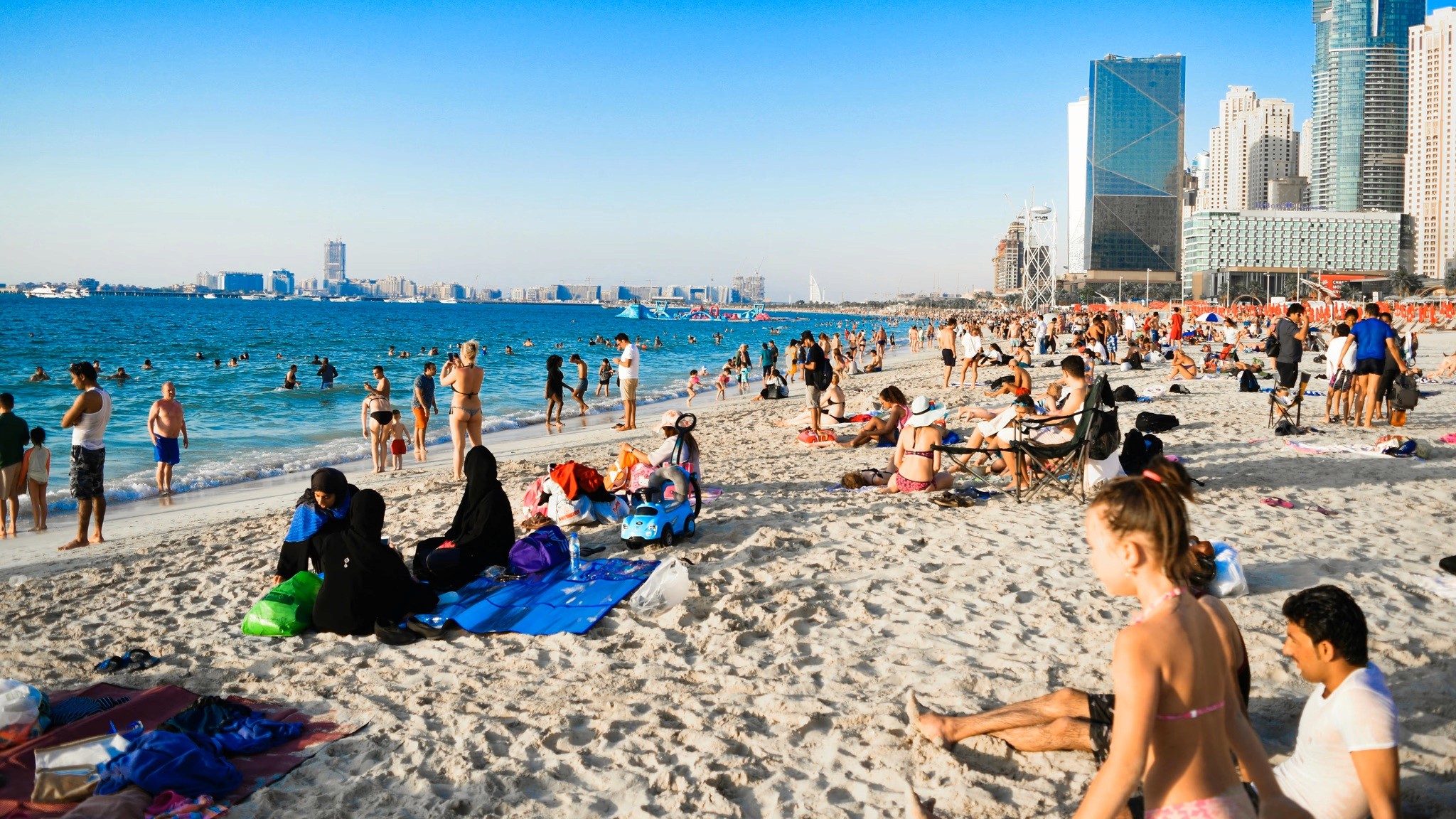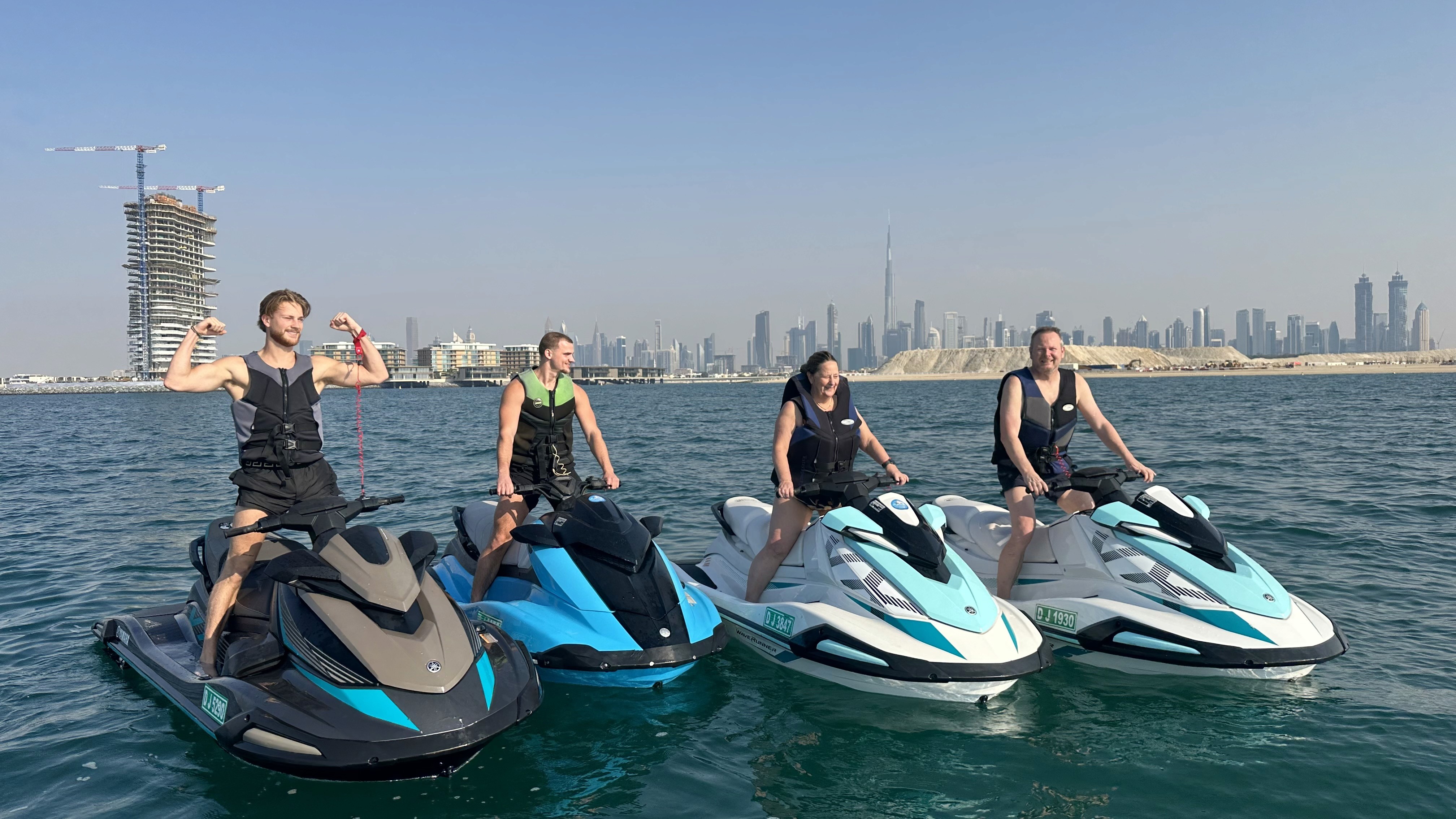
Riding a jet ski is one of the most exhilarating ways to experience the open water. Out on the Arabian Gulf, with Dubai's iconic skyline behind you and open water ahead, the combination of speed and freedom is unlike anything else. For a first-timer, though, the power of a personal watercraft can feel a little daunting.
The good news is that jet skis are genuinely beginner-friendly. With the right preparation and an understanding of the basic controls, you can go from a novice to a confident rider in a single session. This guide covers everything you need to know to get started, from safety essentials to mastering your first turn.
What Should You Do Before Getting on the Water
Good preparation keeps your session focused on the ride, not on avoidable mistakes. Before the engine starts, there are a few things worth getting right.
1. Wear the Right Gear
Every rider and passenger must wear a life jacket or personal flotation device (PFD). Ensure it is Coast Guard-approved and fits snugly; it should not slide up past your ears when you pull on the shoulder straps.
For clothing, a swimsuit is standard, but many riders prefer a wetsuit or “rash guard” to protect against sun exposure and skin irritation from the seat. Footwear like water shoes can provide a better grip on the deck, though many people prefer to ride barefoot.
2. Attach The Safety Lanyard (The Kill Switch)
Every modern jet ski comes with a safety lanyard. This is a cord that connects your wrist or life jacket to the ignition. If you happen to fall off, the lanyard pulls out of the slot and instantly shuts down the engine. This prevents the jet ski from continuing on without you, which is a vital safety feature for both you and others in the water.
3. Review the Handlebar Controls
Familiarise yourself with the controls before starting the engine.
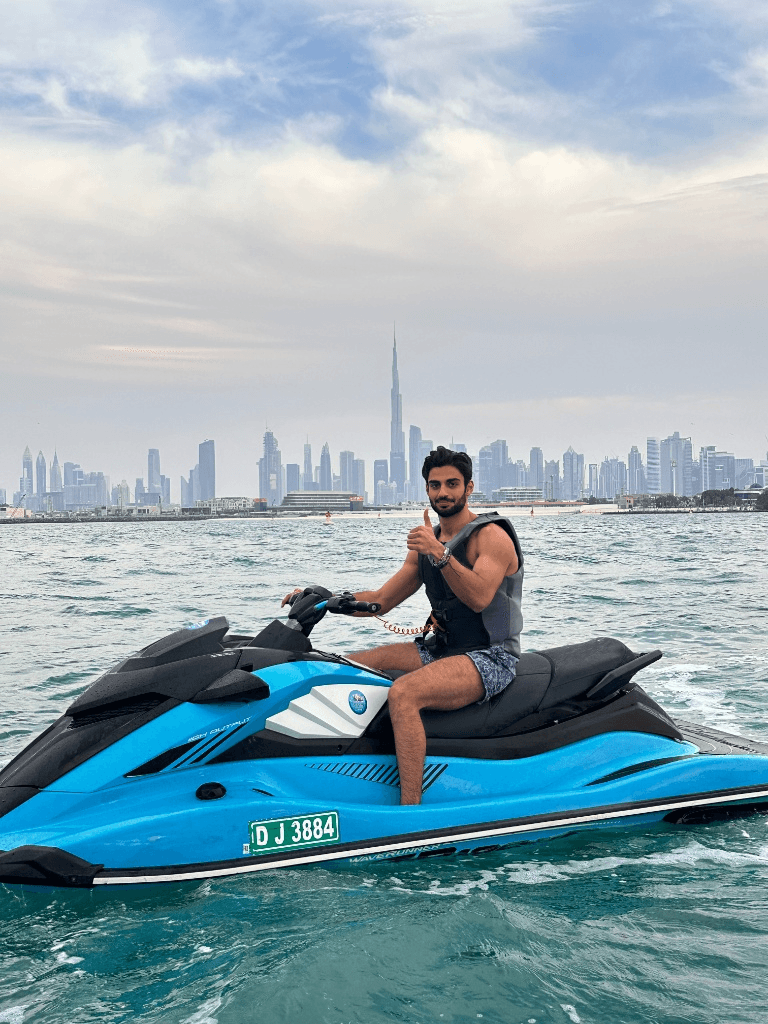
Throttle: Usually located on the right handle, this is a lever you pull with your fingers to go faster.
Start/Stop Button: Clearly marked, usually in red or green.
Reversing Lever/Trigger: Many newer models have a trigger on the left handle for braking or reversing.
Display: This shows your speed, fuel levels, and engine status.
How Do You Properly Board and Start the Engine?
Once you are briefed and geared up, it is time to get on the craft. Take it steadily during this phase; there is no need to rush.
Boarding the Jet Ski
If you are boarding from a dock, hold the handlebars and step into the footwells one foot at a time, keeping your weight centred. If you are boarding from the water, swim to the back of the craft. Use the grab handle on the rear of the seat to pull yourself up onto the boarding platform, then move onto the seat.
Finding Your Balance
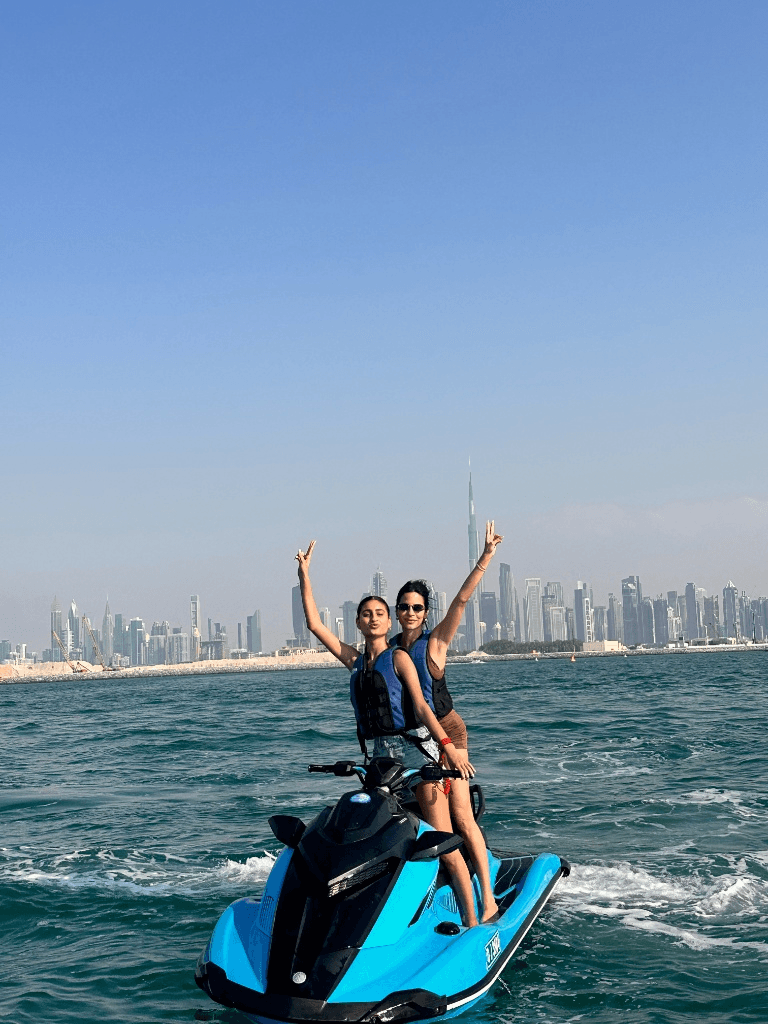
Sit comfortably and keep your back straight. Place your feet firmly in the footwells. If you have a passenger, they should sit behind you and hold onto the dedicated grab handles or grip the sides of your life jacket. Avoid standing up until you are moving and feel stable.
Starting the Engine
Push the start button. You will feel a slight vibration as the engine hums to life. Most jet skis use a jet propulsion system, meaning that as soon as the engine is on, a small amount of thrust is created. You may begin to drift slowly, so be prepared to steer immediately.
How Do You Manage Movement and Steering
Riding a jet ski is different from driving a car. The most important thing to remember is that jet skis require thrust to steer. If you let go of the throttle completely, you lose most of your ability to turn the craft.
Accelerate to Find Your Plane
Gently squeeze the throttle. Start slow to get a feel for how the craft reacts. As you increase speed, the “nose” of the jet ski will lift slightly out of the water. This is called planing. Once you are on a plane, the ride becomes much smoother as you skip over the tops of the waves rather than pushing through them.
Lean Into Your Turns
To turn, move the handlebars in the direction you want to go and keep a steady pressure on the throttle. If you are heading towards an obstacle and you panic by releasing the throttle, the jet ski will continue travelling in its current direction regardless of how much you turn the bars. Always keep a consistent amount of power going to maintain control.
Slow Down Without Using Traditional Brakes
Jet skis do not have traditional brakes that “clamp” onto anything. Instead, when you release the throttle, the water resistance naturally slows you down. Newer models often feature an “iBR” (Intelligent Brake and Reverse) system. When you pull the left lever, the system redirects water flow forward, which acts as a powerful brake and allows you to move backward.
Essential Safety Rules for the Water
The sea is a shared space. Following “rules of the road” keeps everyone safe.
Look Before You Turn: Just like changing lanes in a car, look over your shoulder before making a sharp turn to ensure no one is trying to pass you.
Avoid Tunnel Vision: It is easy to get mesmerised by the water directly in front of you. Keep your head up and scan the horizon for other vessels or debris.
Respect No-Wake Zones: Near docks and swimming areas, there are no-wake zones. This means you should travel at the slowest possible speed that still allows you to steer, creating no waves behind you.
Stay Sober: Operating a personal watercraft requires fast reflexes and clear judgement. Never ride under the influence of alcohol.
Making the Most of Your Jet Ski Rental in Dubai
If you are renting a jet ski in Dubai, you have the advantage of some of the world's most recognisable landmarks on your doorstep. Take the first ten minutes of your session to just practice basic turns and stops near the starting point. Once you feel how the craft responds to your touch, you’ll be able to explore with much more confidence.
Remember, the goal isn’t just to go fast; it’s to enjoy the freedom of being out on the water.